
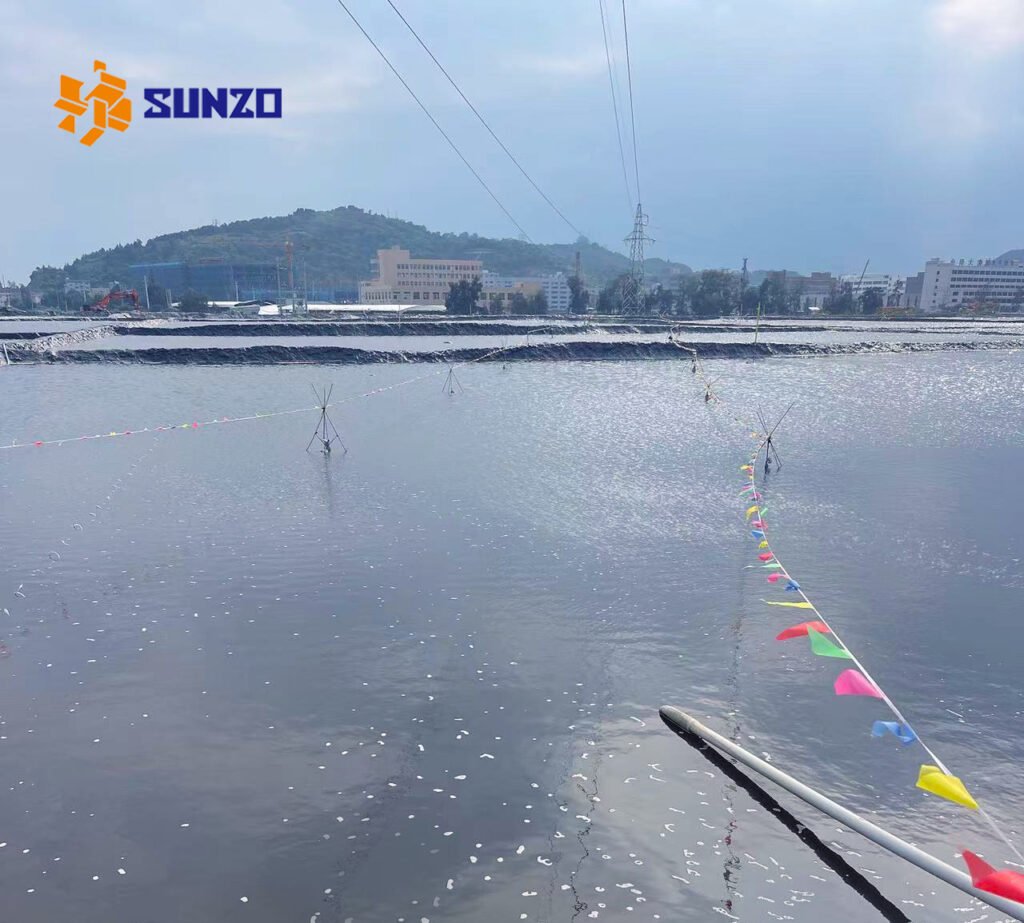
Vacuum preloading may seem straightforward in construction. However, poor control over details can easily lead to quality issues such as insufficient vacuum degree, inadequate settlement, air leakage and uneven consolidation, which will affect project acceptance.
Nine Most Frequent Quality Defects in Vacuum Preloading Construction
Problem 1: Low or unstable vacuum degree under the membrane
Causes: Damaged sealing membrane, weak welds, air leakage at boundary sealing trenches and blocked pipe networks. Solutions: Fully inspect the membrane for damage and re-weld for leakage repair. Compact sealing trenches with moisture maintenance and strictly control the construction quality of sealing walls to ensure tightness. Dredge drainage pipe networks to maintain airtightness.
Problem 2: Uneven local settlement and differential consolidation
Causes: Uneven spacing of prefabricated vertical drains, inconsistent driving depth, blocked local pipe networks and stratified soil properties. Solutions: Strictly control the position and depth of drains, repair blocked pipe networks, and arrange denser drains in weak zones.
Problem 3: Bulging and ponding of sealing membrane
Causes: Uneven site, poor drainage and uneven local negative pressure. Solutions: Carry out fine site leveling in advance, optimize drainage gradient of pipe networks, drain ponding on the membrane timely, and repair membrane if needed.
Problem 4: Pull-back, breakage or deviation of prefabricated vertical drains
Causes: Improper operation of drain insertion machines, overly hard or soft soil, excessive construction speed. Solutions: Standardize equipment operation, control driving speed, and re-drill at unqualified positions.
Problem 5: High energy consumption and low efficiency of vacuum pumps
Causes: Absence of water-gas separator, air leakage in pipe networks and aging equipment. Solutions: Equip water-gas separation systems to reduce loss from water-gas mixing. Inspect equipment regularly and check air leakage points.
Problem 6: Excessive post-construction settlement
Causes: Insufficient pressure stabilization duration, shutdown before consolidation degree meets requirements, persistently low vacuum degree. Solutions: Conduct pressure stabilization strictly in accordance with design requirements. Stop operation only when data is stable and meets standards.
Problem 7: Excessive horizontal displacement
Causes: Too fast negative pressure loading and insufficient restraint of surrounding soil. Solutions: Raise vacuum degree slowly, apply load in stages and strengthen peripheral monitoring.
Problem 8: Poor improvement effect at the edge of reinforcement zone
Causes: Inadequate boundary sealing and severe negative pressure attenuation. Solutions: Deepen and widen sealing trenches, and properly densify prefabricated vertical drains at boundaries to compensate negative pressure loss.
Problem 9: Insufficient construction settlement
Causes: Wider spacing or insufficient depth of drains than designed, substandard vacuum degree and inadequate sustained loading time. Solutions: Arrange prefabricated vertical drains at designed spacing and driving depth. Construct sealing walls and filter fabrics properly, maintain sealing trenches and membrane to achieve designed vacuum degree. Perform sustained loading as specified and carry out unloading only after meeting acceptance criteria.
Source: Guangzhou Sunzo Foundation Engineering Co., Ltd.
Follow SUNZO for continuous updates on soft-ground improvement
 English (South Africa)
 English (United States)
 Vietnamese
 Malay
 French
 Spanish
 Indonesian
 Russian
 Arabic
 Thai
 Panjabi
 Portuguese
 Afrikaans
 Amharic