
When people talk about construction, they often think of skyscrapers’ height, bridges’ span, or airports’ scale. However, what truly determines whether these structures can stand safely often lies underground—within the foundation. Few people visit a building’s foundation, yet once it fails, the entire project can be in jeopardy.
The Leaning Tower of Pisa is a classic example of uneven foundation settlement. In modern construction, the key technology to prevent such issues is GI (Ground Improvement).
Definition of GI: More Than Just “Soil Strengthening”
In engineering, GI is not a single process but a systematic concept. It refers to altering the physical or mechanical properties of soil so that it meets the required bearing capacity and stability for a structure.
GI takes many forms—it can be rigid (e.g., concrete columns), semi-rigid (e.g., gravel or grouted piles), or even a hybrid system. Its core objectives are:
- Improve settlement characteristics: Make soil compression under load more predictable and prevent uneven settlement.
- Increase bearing capacity: Enable weak soil to safely support structural loads.
- Enhance stability: Improve soil performance under earthquakes, floods, or long-term loads.
In short, GI turns “unbuildable ground” into “reliable foundation.”
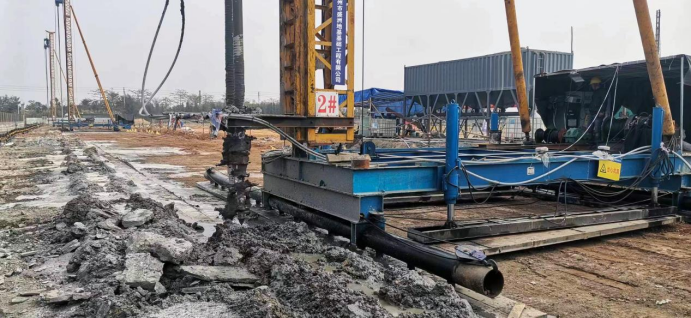
Functions of GI: From Settlement Control to Seismic Resistance
GI plays a critical role in structural safety by addressing the following:
- Settlement Control
Most structural failures result from differential settlement rather than total collapse. For example, if one side of a factory floor sinks a few centimeters, it could misalign or damage equipment. GI ensures uniform settlement or keeps it within acceptable limits. - Enhanced Bearing Capacity
Many projects are built on reclaimed land or loose fill. Without GI, these soils cannot support heavy loads. Ground improvement can effectively double bearing strength, avoiding the need for costly deep foundations. - Improved Seismic Performance
In sandy or saturated soils, earthquakes can trigger liquefaction, making the ground lose its strength. GI densifies the soil and enhances drainage, greatly reducing liquefaction risk. - Economic Efficiency
Compared to deep foundations or mass replacement, GI is usually more cost-effective—often saving 30–50% in costs while shortening construction time.
Applications of GI: From Cities to Coastlines
GI is applicable in virtually all projects requiring reliable foundations:
- Urban redevelopment: Strengthening uneven old foundations via grouting or piling.
- Ports and airports: Large reclaimed or reclaimed-soil areas stabilized by vacuum preloading or dynamic compaction.
- Factories and logistics parks: Heavy-load platforms requiring strong subgrade support.
- Highways and railways: Soft-ground improvement to prevent settlement-related damage.
- Bridges and tunnels: Ensuring long-term stability at abutments and portals.
Simply put, wherever stability matters, GI is essential.
GI and Responsibility: A Multi-Disciplinary Collaboration
Unlike traditional foundations, GI involves multiple specialists, making responsibilities complex:
- Geotechnical engineers: Conduct surveys and recommend GI solutions.
- Structural engineers: Define load requirements for the foundation.
- Design institutes (EOR): Bear overall safety responsibility.
- Specialist subcontractors: Execute GI with patented technologies and experience (e.g., Shengzhou).
- Supervisors and owners: Oversee quality and performance.
Abroad, GI design is often done by licensed engineers within the specialist contractor’s team, while in China, design institutes and general contractors take more responsibility, with GI firms focusing on execution and monitoring.
Thus, GI is both a technical and collaborative system project.
Shengzhou’s Perspective: Systematic, Invisible Engineering
With over 20 years of experience, 46 patents, and 300+ projects, Shengzhou sees GI not as a single process but as a systematic solution.
Our philosophy:
- GI is not isolated: It must integrate with structural design, schedule, and cost.
- GI is systematic: From investigation to construction and monitoring, it must form a closed loop.
- GI provides long-term value: One treatment ensures decades of safety.
Our motto — “A Century of Stability, Built Once to Last Forever” — reflects our belief that GI safeguards not just today’s construction but its future.
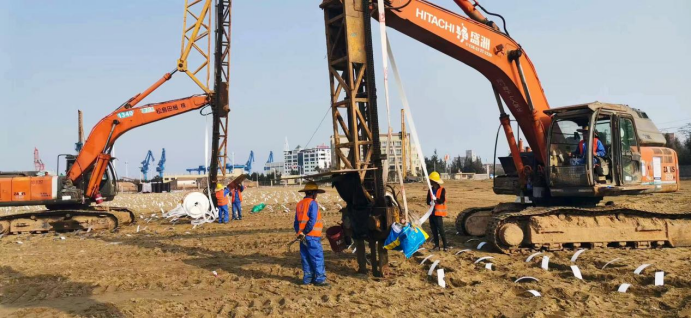
Case Studies: Invisible Support, Visible Results
- Changi Airport, Singapore: With 20+ m of soft soil, Shengzhou applied PVD + vacuum preloading, achieving full consolidation within 12 months, meeting international runway standards.
- BW Industrial Park, Vietnam: Using dynamic compaction on 270,000 m² of mixed fill, the project was completed in 6 months, saving significant costs.
- Guangzhou Huangpu Semiconductor Plant: Combined piling and dynamic compaction ensured minimal settlement for precision equipment.
The common thread: The structures look ordinary on the surface—but only GI makes them truly stable.
FAQ
Q1: What’s the difference between GI and traditional piling?
A: Piles transfer load to deep layers (costly), while GI improves soil in place (more economical).
Q2: Does GI always save costs?
A: Usually yes—30–50% savings are common, but results depend on soil and design requirements.
Q3: Is GI suitable for all soil types?
A: Not necessarily. If soil already meets performance requirements, GI may not be needed.
 English (United States)
  Vietnamese
  Malay
Malay  French
  Spanish
  Indonesian
  Russian
  Arabic
  Thai
Thai  English (South Africa)
  Panjabi
  Portuguese
  Afrikaans
  Amharic