
If you’re dealing with weak or compressible soils, choosing the right ground improvement technique can make or break your project. Between grouted columns and stone columns, which solution offers the best blend of performance, cost, and durability? In this post, we’ll cut through the technical noise and give you a clear comparison of these two proven methods—so you can confidently pick the one that fits your soil conditions, budget, and structural demands. Ready to uncover which ground improvement strategy wins for your next build? Let’s dive into the essentials of ground improvement techniques comparing grouted vs. stone columns.
Understanding the Fundamentals of Ground Improvement Columns
Building on weak or unstable soil presents common challenges like high compressibility, low bearing capacity, and risks of liquefaction. Granular soils such as sands are prone to liquefaction during earthquakes, while cohesive soils like clays can suffer from excessive settlement and poor load support. These issues make ground improvement essential for safe, long-lasting structures.
Column-based ground improvement techniques reinforce the soil matrix by inserting stiff inclusions that increase strength and reduce settlement. By creating a composite system, these columns distribute loads more evenly, improving overall soil performance under structural loads.
Ground improvement has evolved from traditional deep piling to modern vibro techniques, including stone columns and grouted columns. These newer methods offer sustainable solutions with minimal soil spoil, faster installation, and lower environmental impact.
In urban and seismic-prone areas, adapting ground improvement to variable soil types like coastal clays is crucial. Such flexible approaches support the growing demands of infrastructure and help mitigate earthquake risks, making column-based methods a cornerstone for resilient urban development.
Are you facing ground challenges on your next project and wondering which column solution fits best?
Stone Columns Aggregate Piers The Cost Effective Workhorse

What They Are
Stone columns, also known as aggregate piers, are made by compacting gravel or crushed stone into boreholes using a vibro-replacement method. This process improves the soil by reinforcing it with dense, compacted stone columns that boost load capacity and drainage.
Installation Process
Our step-by-step method includes:
- Probing the soil with a vibro-probe to create a hole
- Backfilling with selected aggregate material
- Using vibration to compact the aggregate firmly
- Carefully spacing the columns based on soil conditions and project needs
- Timing the installation to optimize efficiency and minimize downtime
Ideal Soil and Project Types
Stone columns work best in granular soils like sands and silts. They’re perfect for warehouses, roads, and embankments, especially where drainage is key—making them a solid choice for liquefaction mitigation in seismic areas.
Performance Metrics
Using stone columns can:
- Increase shear strength of the soil
- Significantly reduce settlements
- Extend the service life of foundations and structures
Case Study Sunzo Project
At one industrial site, Sunzo used stone columns to stabilize the ground efficiently and cost-effectively. This solution saved money without compromising performance, proving stone columns are a dependable choice for many projects.
Grouted Columns Rigid Inclusions Precision for Challenging Terrains
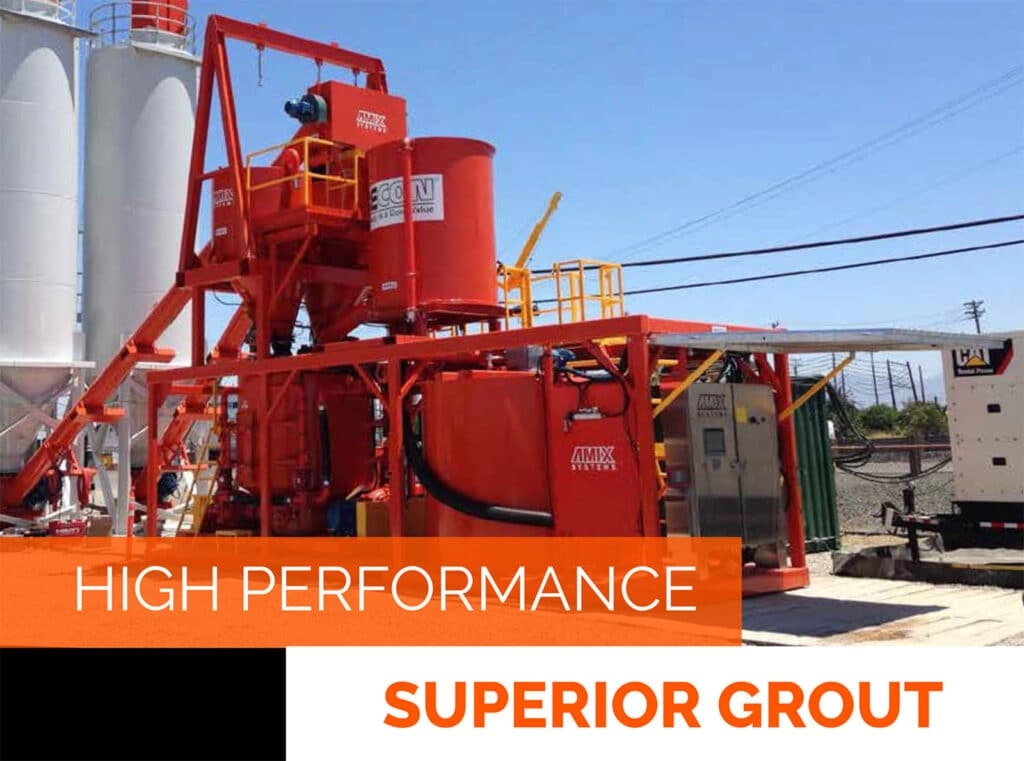
Grouted columns, also known as rigid inclusions, use cement grout or concrete to create stiff, durable columns within the soil. These columns are formed by displacing soil or using jet grouting, which injects high-pressure grout into the ground to improve stiffness and load-bearing capacity with minimal soil removal.
Installation Process
- Insert a vibro-probe or drill to the desired depth
- Inject high-pressure grout through the probe
- Control spacing and curing time carefully to ensure column strength
- Minimal soil spoils are produced, making this eco-friendlier and cleaner on-site
Ideal Soil and Project Types
- Best for very soft clays and silts that can’t support heavy loads on their own
- Used in building foundations for high rises, bridges, and pressured urban infill sites
- Excels in confined spaces where traditional piling might be tough to install
Performance Metrics
- Increases the soil’s stiffness modulus, providing a solid foundation
- Effectively limits settlement, reducing the risk of uneven foundation movement
- Enhances seismic resistance, making it suitable for earthquake-prone areas
Case Study: Sunzo Application
Sunzo reinforced a multifamily tower foundation with grouted columns to prevent differential settlement. This approach ensured long-term stability in a challenging soft soil environment while meeting tight urban construction timelines.
For more on projects involving advanced foundations, check out our pile foundation engineering projects.
Head to Head Comparison Grouted vs Stone Columns
Cost Breakdown
- Stone Columns: More cost-effective upfront and quicker to install. Lower material and labor costs make them a practical choice for many projects.
- Grouted Columns: Higher material and labor expenses due to cement or concrete use and specialized installation methods. However, they often require less maintenance over time, balancing the long-term budget.
Effectiveness in Soil Types
| Soil Type | Stone Columns | Grouted Columns |
|---|---|---|
| Medium to Dense Granular | Excellent for strength and drainage | Less common, not cost-effective |
| Very Soft to Soft Cohesive | Limited effectiveness | Superior stiffness and support |
| Saturated Loose Sands | Good for liquefaction mitigation | Adequate but pricier option |
| Mixed Soils | Effective depending on gravel quality | Performs well in challenging zones |
Pros and Cons
| Aspect | Stone Columns | Grouted Columns |
|---|---|---|
| Strength Gain | Moderate increase in shear strength | High stiffness and load capacity |
| Settlement Control | Effective for moderate settlements | Best for minimal settlement needs |
| Environmental Impact | Usually more eco-friendly due to less cement | Higher carbon footprint due to grout use |
| Installation Speed | Faster, less complex installation | Slower, requires precision and equipment |
| Scalability | Easily scaled for large sites | Best suited for focused or sensitive areas |
| Seismic Suitability | Good for liquefaction-prone soils | Better for preventing differential settlement |
Key Trade-Offs
Choosing between stone and grouted columns often hinges on site feasibility and project specifics:
- Stone columns work best on greenfield sites with ample space and granular soils where speed and cost efficiency matter.
- Grouted columns are preferable for brownfield projects, urban infills, or soft clay sites where precision, high stiffness, and minimal settlement are critical.
For more on how these methods impact your site, see our ground improvement projects page.
Factors Influencing Your Choice Site Assessment to Implementation
Choosing between grouted columns and stone columns starts with a thorough site assessment. Here\’s what to focus on:
Geotechnical Evaluation
- Standard Penetration Test (SPT), Cone Penetration Test (CPT), and soil borings give you clear soil profiles.
- Sometimes a hybrid approach combining tests is best to understand soil variability.
- Knowing if the soil is granular or cohesive helps determine which column type fits best.
Regulatory and Sustainability Angles
- Make sure your project complies with local building codes and environmental regulations.
- Grouted columns often use low-emission cement blends, helping reduce your carbon footprint.
- Stone columns usually use recycled aggregate, which can be an eco-friendly choice too.
Budget Versus Risk
- Stone columns usually cost less upfront with faster installation time.
- Grouted columns may have a higher initial price but often lower long-term maintenance needs.
- Use an ROI calculator to weigh initial savings against potential expensive rework if soil conditions are tough.
Local Considerations
- Adapt your ground improvement strategy to regional needs—coastal areas might have soft clays requiring grouted columns.
- Seismic zones demand solutions that boost soil stability under earthquake loads.
- Flood-prone or high water table sites can also influence which method performs better.
Taking all these factors into account ensures your ground improvement solution fits the project needs, budget, and local conditions for the best outcome. For more on site-specific approaches, check our ground improvement project resources.
When to Call in Experts Sunzo’s Approach to Tailored Ground Solutions
Sometimes, ground improvement isn’t one-size-fits-all. You should call in experts like Sunzo when you face variable subsurface conditions, tight project timelines, or high-stakes loads where failure isn’t an option. These situations need precise evaluation and customized solutions to avoid costly delays or rework.
Why Choose Sunzo for Ground Improvement
Sunzo stands out because we handle everything in-house—from design and build to on-site execution. We use BIM-integrated modeling to plan and optimize every step, ensuring projects stay on budget and schedule. This tech-driven approach means fewer surprises and smoother delivery.
Proven Results You Can Trust
Our success shows in client feedback and project performance. We consistently improve soil bearing capacity and reduce settlement, even in tough urban or seismic zones. Check out our global projects for real-world examples of how we tailor solutions for different sites and needs.
Ready to Get Started
Don’t take chances on unstable ground. Contact us for a free site audit and consultation. We’ll evaluate your soil and recommend the right ground improvement method—whether it’s grouted columns or stone columns, we help you choose what works best for your project.
Schedule your audit today and secure a solid foundation for your build.
 English (United States)
  Vietnamese
  Malay
Malay  French
  Spanish
  Indonesian
  Russian
  Arabic
  Thai
Thai  English (South Africa)
  Panjabi
  Portuguese
  Afrikaans
  Amharic