
In modern infrastructure construction, the ground is always the first factor that determines the success of an engineering project. The stability of a bridge, the operability of a port, the safety of a metro system, and the long-term performance of a high-rise building all rely on whether the foundation is reliable enough. Yet natural soil conditions rarely meet ideal engineering requirements. Soft clay, silt, miscellaneous fill, loose sand, and liquefiable soil layers are found all over the world.
So how do we transform these “non-ideal” soils into “ideal” ones?
The answer is ground improvement.
This article explains the principles, methods, design logic, applications, risks, and future trends of ground improvement. It also draws from Sunzo Foundation Engineering’s more than twenty years of practical experience. The goal is to provide engineers, designers, and contractors with actionable and realistic guidance.
One. Principles and Objectives of Ground Improvement
(1) Why do we need ground improvement?
Most construction sites cannot rely on naturally strong soils. Replacing the soil or using deep piles can solve some problems, but the cost and time involved are often too high. Ground improvement allows us to enhance or modify the existing soil so that it can meet engineering requirements without complete replacement.
(2) Core objectives
Ground improvement always pursues multiple goals at the same time:
• Improve bearing capacity
• Control total settlement and differential settlement
• Enhance resistance to liquefaction
• Improve drainage and consolidation behavior
• Increase overall stability of embankments, slopes, and roadbeds
Two. Major Ground Improvement Methods
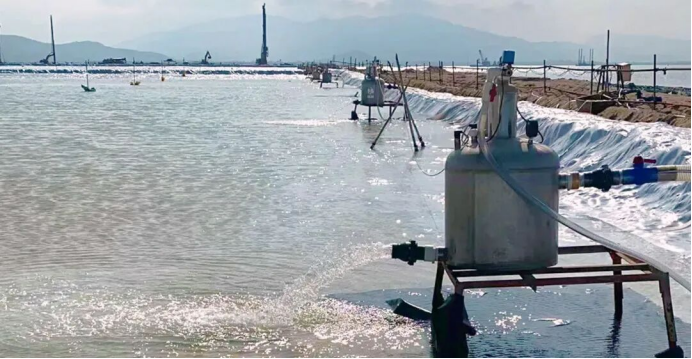
(1) PVD Combined with Vacuum Preloading
This method creates vertical drainage channels and applies vacuum pressure to extract pore water. The combined effect accelerates consolidation and increases soil density.
Sunzo patented technologies include:
- Sandless vacuum preloading (Patent 2007100312215)
- Soft soil treatment with timed drainage closure (201710107951.2)
- Water–gas separation device for vacuum preloading (201510083730.7)
- Water–gas separation vacuum preloading method and device (201310481313.9)
Advantages:
• High efficiency and fast consolidation
• Significant time savings
• Reduced resource consumption
• Minimal environmental impact
Applications: Port yards, airport runways, expressway embankments, land reclamation areas.
Successful projects: Changi Airport (Singapore), Tekong Island (Singapore), Formosa Ha Tinh Steel (Vietnam), Dhamra Port (India), University of Macau (Zhuhai), HKUST (Guangzhou), Prologis logistics parks, e-Shang logistics parks, Nansha Port (Guangzhou), Yangjiang LNG storage facility.
(2) PVD Combined with Surcharge Preloading
This method installs vertical drainage channels and applies surcharge loading to force pore water out. It is one of the most cost-effective large-area soft ground treatment methods.
Advantages:
(1) Shortened consolidation time
(2) Suitable for large areas
(3) Cost-effective
(4) Stable long-term settlement performance
Applications: Multi-story factories, logistics yards, expressways, reclaimed land.
Successful projects: Fao Port (Iraq), Macau New Zone A reclamation, Hong Kong–Zhuhai–Macau Bridge island-tunnel project, Hailing Port (Yangjiang).
(3) Replacement Method (Cushion Replacement)
This method excavates shallow weak soil (usually within 3 meters) and replaces it with sand, gravel, lime soil, or other high-quality materials compacted to high density.
Applications: House foundations, small factories, shallow soft soil areas, soft soil thickness ≤2 meters.
Advantages and disadvantages:
Fast, simple, and inexpensive, but limited in depth and unsuitable for deep soft soil.
(4) Shallow Dynamic Compaction (Single energy ≤1000 kN·m)
A 10–20 ton hammer is dropped from 5–8 meters to densify shallow soil to a depth of 1–3 meters.
Applications: Loose sand, miscellaneous fill, and shallow improvement zones.
Advantages: Fast and economical.
Disadvantages: High noise and vibration, unsuitable near sensitive structures.
(5) Deep Dynamic Compaction (Single energy ≥2000 kN·m)
A 20–40 ton hammer is dropped from 10–20 meters to compact deeper soil layers (3–10 meters).
Applications: Airport runways, large industrial zones, deep loose sand or gravel layers.
Advantages: Excellent deep improvement at low cost.
Disadvantages: Large vibration influence and higher equipment requirements.
(6) Cement Mixing Piles
A mechanical mixer injects and blends cement with soft soil to form a solidified column.
Technical advantages:
- In-situ solidification with minimal environmental disturbance
- Direct and controllable improvement
- Good economic performance
- Wide range of applications and adaptability
Applications: High-rise podium foundations, metro stations, underground basements, groundwater cutoff walls, and composite foundations.
Three. Method Selection and Design Logic
(1) Decision process
(1) Soil investigation and groundwater assessment
(2) Define engineering performance requirements
(3) Compare alternative methods using a decision matrix
(4) Optimize or combine multiple methods
(2) Selection matrix (summary)
Deep soft soil 5–20 m → PVD + vacuum preloading
Soft clay 3–15 m → PVD + surcharge preloading
Fill soil ≤3 m → Replacement method
Loose fill 3–6 m → Shallow dynamic compaction
Gravel/sand 6–12 m → Deep dynamic compaction
Soft clay 5–15 m → Cement mixing piles
Four. Construction and Monitoring: From Prediction to Verification
Construction control focuses on ensuring each method is applied effectively:
• For vacuum preloading: maintain airtightness and suction stability
• For surcharge preloading: balance loading speed and drainage rate
• For replacement method: control material quality and compaction density
• For dynamic compaction: manage impact energy to avoid structural impact
• For deep dynamic compaction: ensure effective deep energy transfer
• For cement mixing piles: ensure cement uniformity and compressive strength
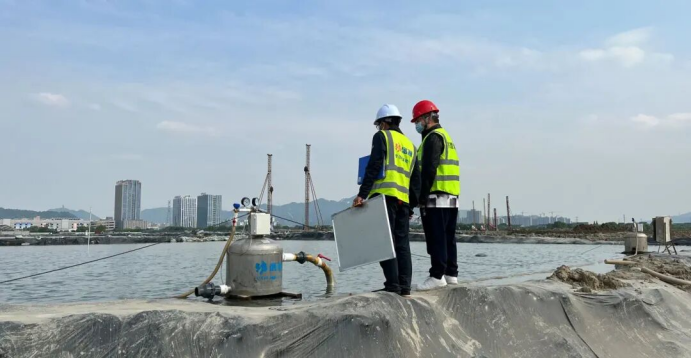
Monitoring and testing methods include settlement plates, pore-water pressure gauges, CPT, SPT, and strength verification tests.
Sunzo’s philosophy: Monitoring is the second design. Only monitoring can verify the true effectiveness of ground improvement.
Five. Typical Application Scenarios
(1) Ports and container yards
Vacuum preloading and surcharge preloading help meet heavy stacking demands.
(2) Cross-sea bridges
Reclaimed artificial islands use vacuum preloading and cement mixing piles, often reducing cost by 30%.
(3) Metro foundation pits
Deep mixing and high-pressure grouting create cutoff walls with permeability as low as 10^-7 cm/s.
(4) Urban redevelopment
Low-vibration methods such as CFG piles and grouting protect surrounding buildings.
Six. Risks and Limitations
• Environmental impacts such as vibration, noise, and water pollution
• Technical limitations on depth and soil type
• Heavy reliance on operator experience
• Some extreme conditions still require deep piles
Seven. Future Trends
(1) Smart monitoring using real-time IoT
(2) Green and recycled materials
(3) Hybrid and combined ground improvement methods
Eight. Sunzo’s Experience and Strengths
• More than 20 years of soft ground engineering experience
• Over 300 completed projects
• 46 patents including vacuum preloading and dynamic compaction technologies
• International experience including the Hong Kong–Zhuhai–Macau Bridge, Changi Airport, and Vietnam Formosa projects
• A complete one-stop system: investigation, design, construction, monitoring, and after-service
Sunzo philosophy: “A foundation built to last a century.”
Nine. Closing Remarks
Ground improvement is more than a technical operation; it is a fundamental guarantee of structural safety and long-term economic performance. From ports to metro systems, from reclaimed land to industrial parks, it supports nearly every major infrastructure project.
As intelligent construction and green technologies continue to advance, ground improvement will become more precise, efficient, and environmentally friendly. Sunzo is committed to working with partners around the world to build strong and reliable foundations for the next generation of infrastructure.
 English (South Africa)
  English (United States)
  Vietnamese
  Malay
Malay  French
  Spanish
  Indonesian
  Russian
  Arabic
  Thai
Thai  Panjabi
  Portuguese
  Afrikaans
  Amharic