 跳至内容
跳至内容 
Why Ground Improvement Matters
When it comes to construction, the ground beneath your project plays a crucial role. Weak, compressible, or liquefiable soils—especially common in urban reclaimed areas—can cause serious challenges. These soil issues lead to excessive settlement, instability, and even failure under seismic forces. Ignoring ground conditions can result in costly repairs, delays, or unsafe structures.
Ground improvement techniques address these problems by strengthening the soil to create a more stable foundation. The benefits are clear:
- Increased load capacity up to 4 times stronger than untreated soil
- Settlement reduction by 50 to 80 percent, keeping structures safe and sound
- Seismic mitigation to protect buildings in earthquake-prone zones
- Eco-friendly alternatives to traditional deep foundations, reducing environmental impact
For over 20 years, Sunzo has specialized in sustainable soil solutions that enhance ground properties while minimizing carbon footprint. Our experience helps clients overcome challenging soil conditions with proven, effective ground improvement methods tailored to today’s construction demands.
Classification of Ground Improvement Methods
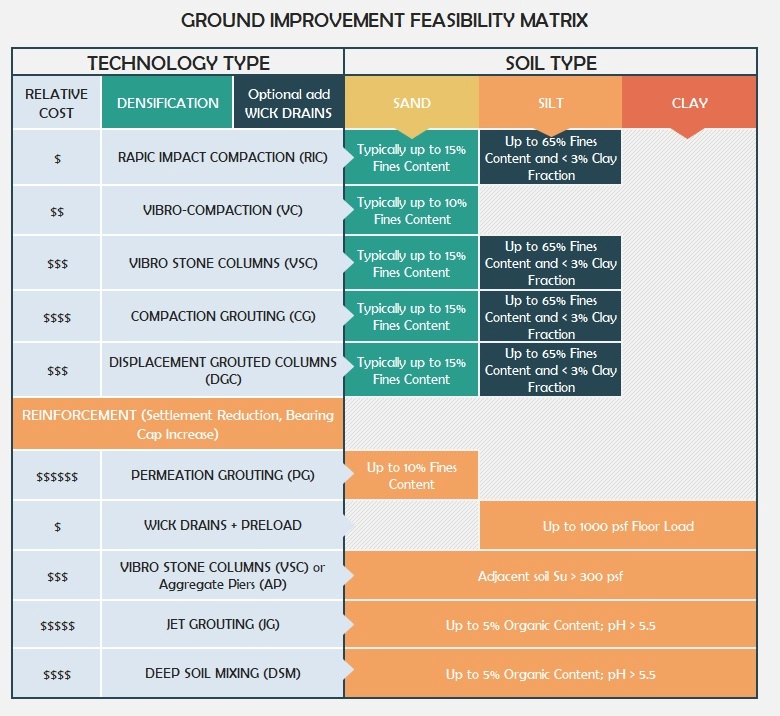
Ground improvement techniques generally fall into three main categories: mechanical, chemical, and reinforcement approaches. Here’s a quick breakdown:
-
Mechanical Methods
These improve soil by physically densifying it. Common examples include vibration compaction and dynamic compaction, where force is applied to reduce voids and increase soil density. This works great for granular soils like sands and gravels.
-
Chemical Admixture Methods
This involves mixing binders such as cement, lime, or other stabilizers directly into the soil. The chemical reaction strengthens weak or compressible soils, making them more stable and load-bearing. Deep soil mixing is a popular chemical approach for cohesive soils.
-
Reinforcement Methods
Reinforcement adds materials like geosynthetics, soil nails, or piles to enhance soil strength. These elements create a composite structure, improving stability and tensile strength—often used in slopes or erosion control.
-
Hybrid Approaches
Sometimes, combining methods provides the best solution for tricky sites. For example, compaction grouting mixes mechanical and chemical techniques to densify and stabilize soils simultaneously, handling complex ground conditions effectively.
These categories cover most of the ground improvement options we use to fix weak soils and tailor solutions for different site challenges.
In Depth Guide to Key Ground Improvement Techniques
Vibro Compaction and Stone Columns Densifying Granular Soils
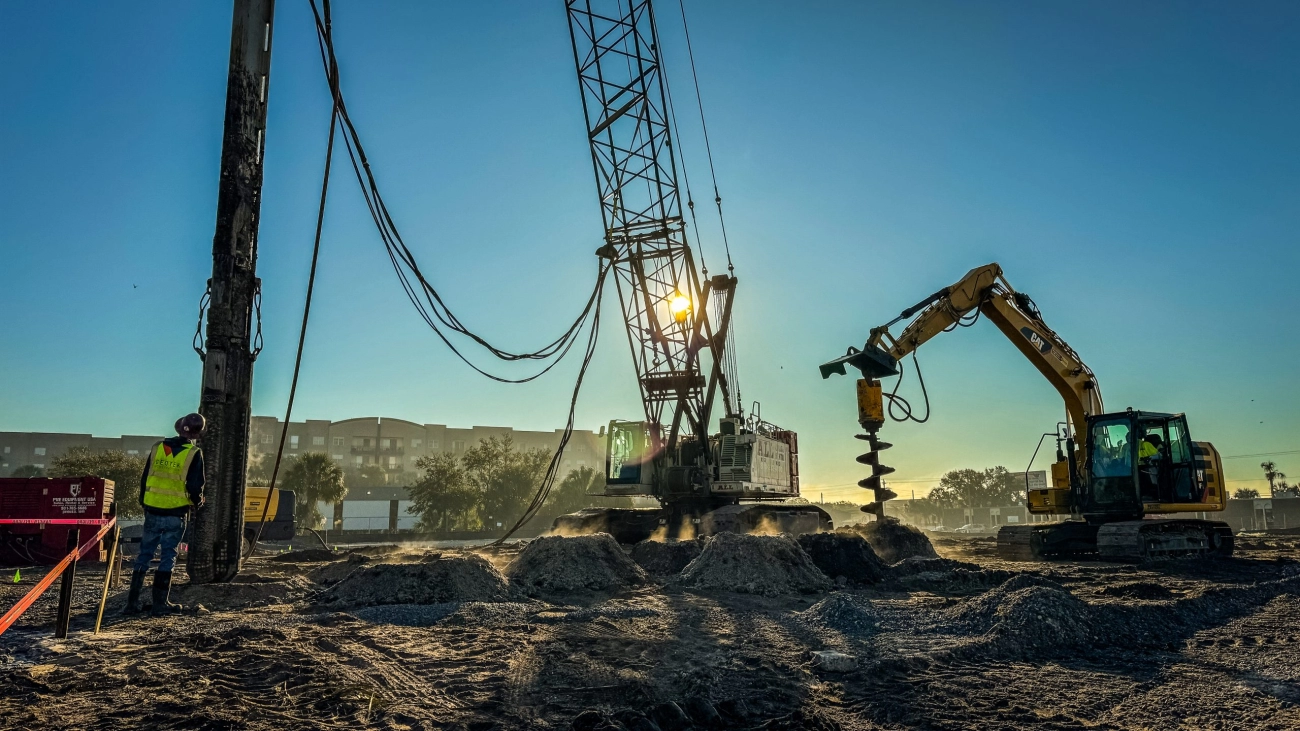
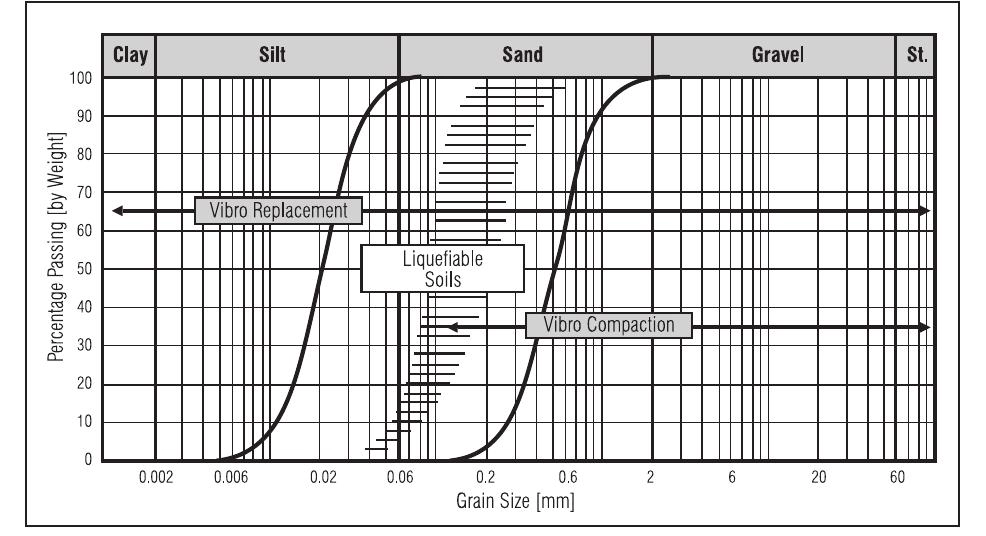
Vibro compaction uses a vibrating probe to compact loose sands and gravels deep into the ground. Stone columns, also known as aggregate piers, are formed by driving or vibroflotation to create stiff columns that reinforce weak soils. These methods are great for improving load capacity and reducing settlement in sandy or granular soils.
How it works:
- A vibrating probe is inserted into loose soil layers
- The vibration rearranges soil particles, increasing density
- Stone columns are constructed by filling shafts with crushed stone under vibration
- This results in stronger soil with better drainage and load-bearing capacity
Where it’s used:
- Site preparation for buildings and bridges
- Ideal for sandy soils up to 30 meters deep
- Common in urban reclaimed land and other weak granular soils
Advantages:
- Cost effective, often 20 to 40% cheaper than traditional piling
- Fast installation speeds up project timelines
- Reduces settlement significantly
Limitations:
- Not effective for clayey or highly cohesive soils
- Equipment access and soil conditions can affect results
At Sunzo, we applied vibro compaction in a 2025 urban development project that cut settlement by 70%, demonstrating real-world performance and cost savings for clients dealing with weak soils in city environments.
Deep Soil Mixing DSM Blending for Cohesive Stability
Deep Soil Mixing (DSM) is all about improving soft, weak soils like clays and silts by mixing them right in place with cement, lime, or other stabilizers. This process creates solid, hardened columns in the ground that boost soil strength and reduce settlement.
How DSM Works
- A specialized mixer is inserted into the soil.
- It blends binders like cement or lime with the soft ground directly underground.
- This forms stiff, load-bearing columns that support structures above.
Where It’s Used
- Embankment support on highways.
- Retaining walls needing strong foundations.
- Sites with high water tables where traditional soil methods fall short.
Benefits and Challenges
- High soil strength gain, often up to 1000 kPa.
- Works well in tricky locations with soft or wet soils.
- Versatile for many project types.
- Requires precise equipment and skilled operators to get it just right.
At Sunzo, we tailor custom DSM mixes designed specifically for seismic zones in the U.S., ensuring top performance and safety for your ground improvement needs.
Grouting Techniques Permeation and Compaction for Precision
Grouting is a precise ground improvement method where we inject cementitious or chemical grouts into the soil to fill voids or displace weak soil. This process strengthens and stabilizes the ground, making it ideal for tough conditions.
Types of Grouting
- Permeation Grouting: Best for fine sands and silts, grout seeps through soil pores without disturbing the ground.
- Compaction Grouting: Thicker grout that displaces soil and compacts it, creating a denser soil mass.
- Void Filling: Used to close underground cavities or sinkholes.
- Jet Grouting: High-pressure jets break up soil and mix it with grout to form soil-cement panels, offering strong stabilization.
Common Applications
- Controlling water leakage in tunnels and underground structures.
- Underpinning and strengthening existing foundations.
- Sealing soil for waterproofing or erosion control.
Pros and Cons
- Pros: Minimal disruption to the site, highly targeted soil stabilization, and effective even under water.
- Cons: Generally higher costs for treating large areas compared to other ground improvement methods.
At Sunzo, we recently applied permeation grouting for a tunnel waterproofing project, ensuring long-lasting soil sealing with minimal downtime. This precision approach is a great choice when exact control over soil conditions is critical.
For more on minimizing soil settlement effectively, check out our consolidation grouting services.
Dynamic Compaction and Preloading with Drains Surface Level Fixes
Dynamic compaction uses heavy weights dropped from heights to densify loose soil layers, improving ground stability quickly. Along with this, preloading with vertical drains and surcharges helps squeeze water out of soft soils, speeding up settlement and consolidation.
This method works best for large areas like landfills, ports, and reclaimed land where soils need improvement down to about 10 to 15 meters. It’s a cost-effective option for covering broad sites without heavy equipment or deep foundations.
Pros:
- Great for big sites
- Speeds up settlement, reducing project delays
- Lower cost compared to deep excavation
Cons:
- Can cause noise and vibration that may affect nearby structures
- Not suited for very soft or highly compressible clays
At Sunzo, we’ve enhanced this method by integrating wick drains with real-time monitoring. This allows us to track soil consolidation constantly and adjust as needed, ensuring safer, faster results without surprises. It’s a smart, reliable approach to improve soil conditions on demanding projects.
Reinforcement and Other Advanced Ground Improvement Methods
When simple compaction or chemical stabilization isn’t enough, we turn to reinforcement and advanced methods. These include installing piles, soil nails, or even freezing the ground by chilling pore water temporarily to keep soils stable.
How It Works
- Piles and soil nails provide extra structural support by physically tying soil or rock layers together, making slopes and excavations safer.
- Freezing involves circulating coolant to turn groundwater into ice, creating a solid barrier during construction or excavation in tricky spots.
Where It’s Used
- Stabilizing steep slopes or deep excavations
- Controlling erosion with geosynthetics—synthetic fabrics or grids that reinforce soil and prevent washouts
- Temporary support in sensitive urban projects or underwater construction
Pros and Cons
Pros:
- Boosts tensile strength and soil stability beyond what basic methods can offer
- Many options are eco-friendly, especially geosynthetics made from recycled materials
- Useful in hard-to-treat soils or complex jobs
Cons:
- Some methods are site-specific and need careful planning
- Equipment and installation can be costly
- Freezing is temporary and mostly for short-term needs
New Trends
The industry is pushing toward more sustainable solutions, like bio-based admixtures that improve soil strength without harsh chemicals. These innovations help reduce environmental impact and meet stricter US regulations on construction sustainability.
At Sunzo, we leverage these advanced reinforcement techniques to tailor solutions that suit your project’s unique challenges, balancing strength, cost, and eco-friendly choices.
Selecting the Right Ground Improvement Method Factors and Best Practices
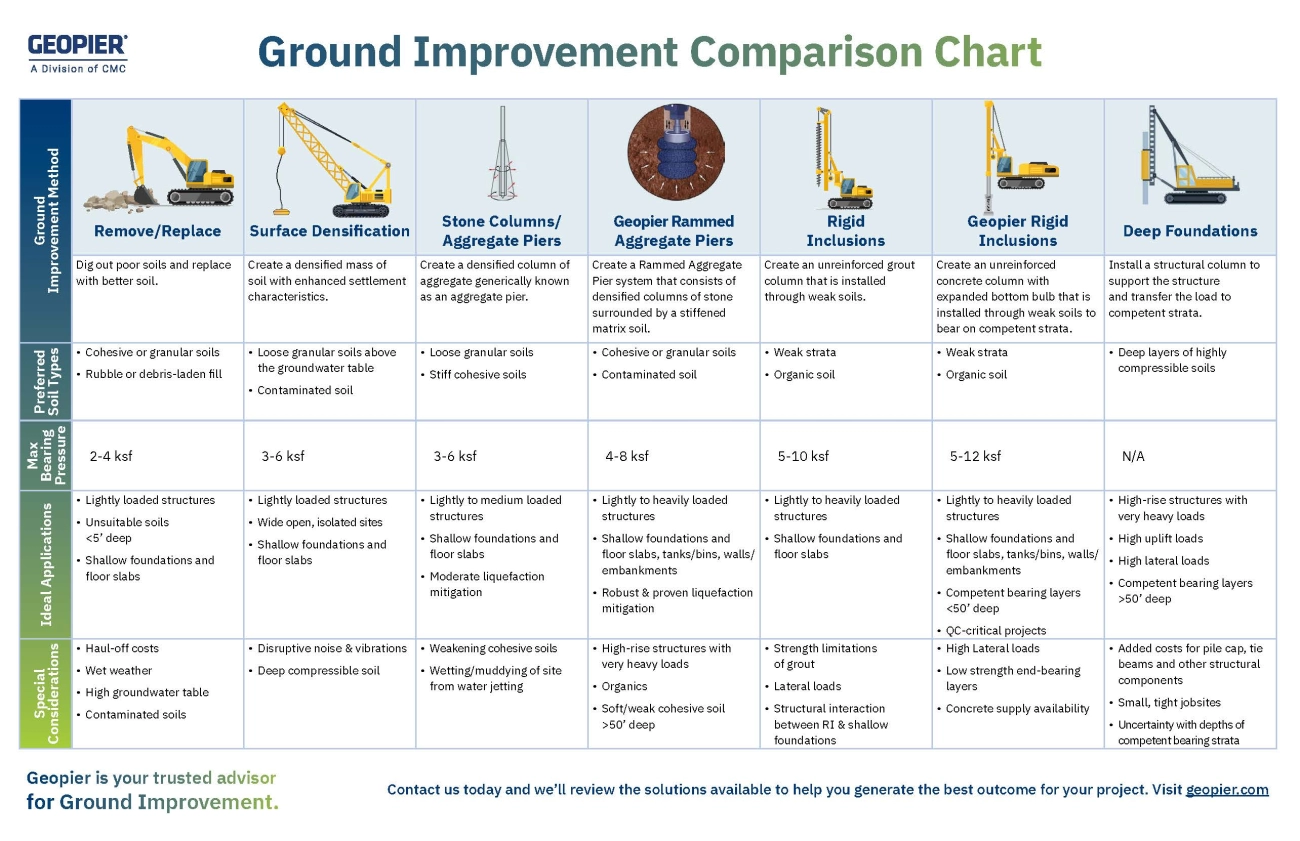
Choosing the right ground improvement method starts with a solid soil assessment. You need to know if you’re dealing with granular soils like sand and gravel or cohesive soils like clay. Depth and groundwater conditions also play a big role in what solution will work best for your site.
Next, project factors come into play. Think about your budget, timeline, and any environmental regulations—especially if you’re looking for low carbon or eco-friendly methods. These can significantly influence your options.
Here’s a quick cost comparison to help guide decisions:
| Method | Approximate Cost (per cubic yard) |
|---|---|
| Aggregate Piers | $50 – $100 |
| Deep Soil Mixing (DSM) | $80 – $150 |
Keep in mind, cheaper isn’t always better if it means risking long-term stability.
At Sunzo, we back every project with a free site evaluation and thorough simulation modeling. This approach helps us customize ground improvement solutions that fit your soil conditions and project needs, resulting in a 95% success rate. This level of precision ensures you get cost-effective, reliable soil stabilization methods every time.
Real World Applications and Case Studies in Ground Improvement
Ground improvement techniques aren\’t just theory—they play a key role in real projects around the U.S. For infrastructure, stone columns have stabilized bridge approaches, providing strong support on tricky soils and reducing settlement issues. On the commercial side, deep soil mixing (DSM) has been a go-to for high-rise buildings constructed on reclaimed land, offering enhanced stability where traditional foundations struggle.
At Sunzo, we’ve completed over 20 projects using these methods with great results. For example, in three recent cases, our team shaved project timelines by up to 40%, thanks to efficient ground improvement combined with smart project management. These improvements led to quicker site readiness and reduced costs without compromising safety.
What we’ve learned is that adaptability and continuous monitoring are crucial. Every site has unique challenges, and by tailoring our approach and tracking progress, we help ensure long-term performance and safety. Our experience shows that combining the right ground improvement methods with ongoing quality checks protects your investment for years to come.
Future of Ground Improvement Innovations and Sustainability
The ground improvement landscape is evolving fast with new tech and eco-friendly methods shaping the future. AI-driven soil analysis is becoming a game-changer, helping us understand soil conditions quicker and more accurately. This means smarter decisions and targeted solutions for your site.
Another exciting development is Microbial Calcite Precipitation (MICP), where bacteria naturally strengthen soil by producing calcite crystals. It’s a green alternative that reduces the need for traditional chemical stabilizers. Alongside this, recycled materials are gaining traction, cutting down waste and promoting sustainability in ground improvement.
At Sunzo, we’re committed to reducing the carbon footprint of soil stabilization methods by 30 percent. Our eco-friendly ground improvement techniques balance performance with environmental responsibility, giving US customers reliable, cost-effective solutions that fit local regulations and green goals.
Ready to strengthen your site with the latest sustainable methods? Contact Sunzo for a consultation and let’s build stronger, greener foundations together.
 English (South Africa)
  English (United States)
  Vietnamese
  Malay
Malay  French
  Spanish
  Indonesian
  Russian
  Arabic
  Thai
Thai  Panjabi
  Portuguese
  Amharic