
The Fundamentals of Ground Improvement Techniques
Ever wondered why some construction projects seem to run into endless delays and costly surprises? Most of the time, it comes down to the ground beneath our feet. If you’re asking, “How do I make sure my site is ready for heavy construction?” or “What’s the best way to fix weak or unpredictable soil?”—you’re in the right place.
Assessing Site Challenges and Common Soil Issues
Every site has its own quirks. Before we dive into solutions, we look at what’s holding your project back:
- Soft soils that shift under load, risking settlement and uneven foundations
- Loose sands or fill materials that can’t support structures without densification
- High groundwater that increases instability and complicates excavation
- Expansive clays that swell and shrink, causing cracks and movement
We see these issues all the time across the US. They’re manageable—if you know what you’re dealing with.
Benefits of Ground Improvement for Construction Projects
Investing in ground improvement isn’t just about ticking a box. It’s about:
- Boosting bearing capacity so your foundation can handle heavy loads
- Reducing settlement for long-term structural stability
- Speeding up construction by eliminating delays due to poor ground
- Cutting costs by avoiding deep foundations or expensive repairs
- Expanding buildable land for bigger, more ambitious projects
In short, better ground means fewer headaches and more predictable results.
Importance of Geotechnical Surveys Before Choosing a Method
Here’s the truth: no two sites are exactly alike. That’s why a geotechnical survey is a must before picking any ground improvement technique.
- Soil testing tells us what we’re working with—grain size, moisture, strength, and more
- Site history reveals past use, contamination, and fill materials
- Load requirements guide us to the right solution for your project’s needs
Think of it like a health check for your site. Without it, you’re guessing—and in construction, guessing is expensive.
Ready to solve your ground problems? At Sunzo, we specialize in matching the right ground improvement technique to your site’s unique challenges. Reach out and let’s get your project off the ground—literally.
Core Categories of Ground Improvement Techniques
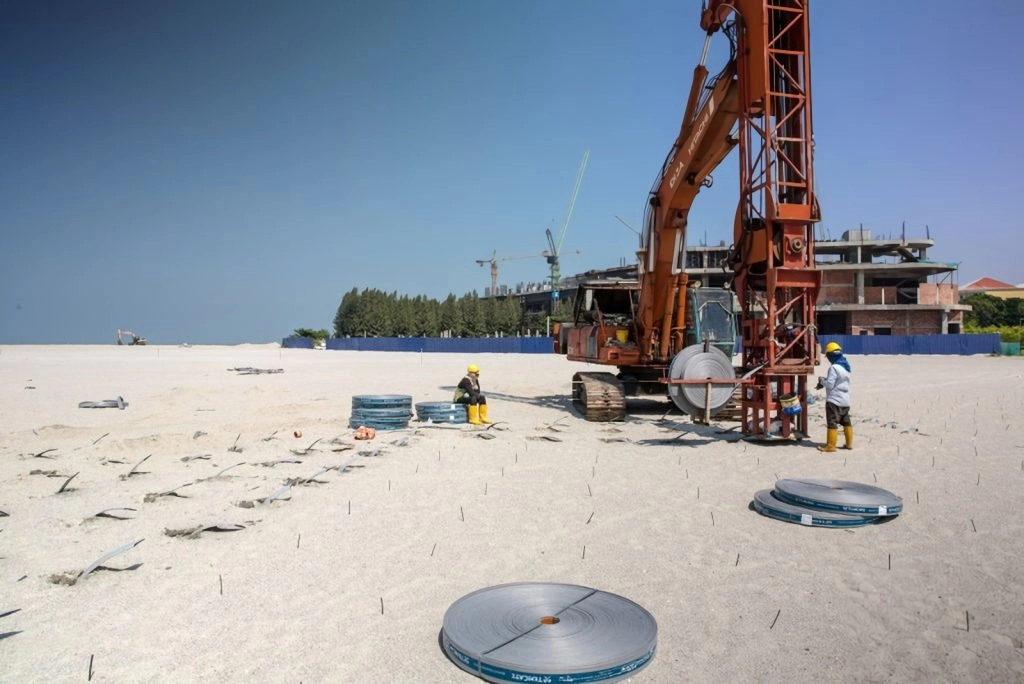
When it comes to ground improvement, there’s no one-size-fits-all solution. Here’s a breakdown of the main types of ground improvement techniques we use as a ground improvement contractor in the United States. Each method fits a specific soil challenge, project need, and budget.
Mechanical and Densification Methods
- Dynamic Compaction: This process uses heavy weights dropped from height to densify loose, granular soils. It’s quick and works well for large areas needing better bearing capacity.
- Vibro Compaction: For deeper soil densification, vibro compaction uses a vibrating probe to rearrange soil particles. It’s ideal for sandy sites and supports heavy structures.
Drainage and Consolidation Methods
- Prefabricated Vertical Drains (PVDs) and Preloading: PVDs speed up drainage in soft, compressible soils. Combined with preloading, they help settle the ground before construction starts.
- Vacuum Consolidation: Instead of traditional loading, this method uses vacuum pressure to squeeze water out of soft soils, making them stronger and more stable.
Chemical Stabilization Methods
- Deep Soil Mixing: We blend in cement or other binders to boost soil strength and stability. It’s great for areas with weak or contaminated soils.
- Jet Grouting: High-pressure jets inject grout into the soil, creating columns of improved ground. This technique is precise and works well for underpinning or waterproofing.
- Permeation and Compaction Grouting: These grouting methods fill voids and cracks, increase bearing capacity, and reduce settlement risks.
Reinforcement Methods for Load Distribution
- Stone Columns and Aggregate Piers: Installing stone columns or aggregate piers increases bearing capacity and reduces settlement, especially in soft clay or silt.
- Soil Nailing: This stabilizes slopes and excavations by inserting steel bars (nails) into the soil and anchoring them.
- Geosynthetics: Geotextiles and geogrids reinforce embankments, slopes, and roads. They help distribute loads and prevent erosion.
Advanced and Specialized Techniques
- Ground Freezing: Temporarily freezes soil to provide support during tunneling or deep excavations. It’s reliable for tricky urban jobs.
- Electro Osmosis: Uses electrical currents to move water out of fine clays, improving soil strength and reducing settlement.
- Microbial Calcite Precipitation: A newer, sustainable approach where microbes help bind soil particles with calcium carbonate, improving stability without chemicals.
For more details about our approach and the full range of services, check out our ground improvement contractor page. You can also see specific project examples at ground improvement project.
These ground improvement techniques are proven across all kinds of construction—from highways and airports to coastal reclamation and urban high-rises. We always match the method to your site’s soil, project specs, and budget for the best results.
Selecting the Right Ground Improvement Technique
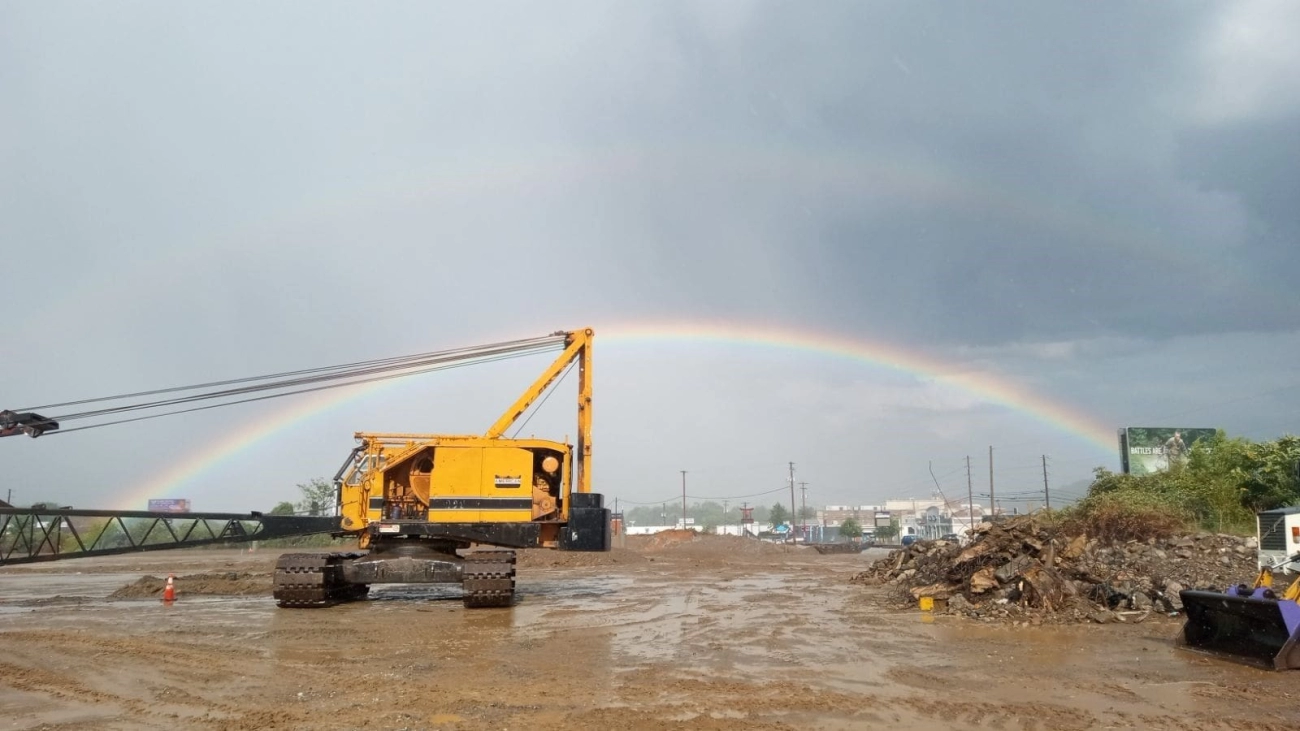
When it comes to picking the best ground improvement technique, it’s not a one-size-fits-all deal. Here’s what we look at to help our customers in the US make smart choices:
Key Factors for Selection
- Soil Type: Sandy, clay, silt, or mixed soils all need different approaches. For example, vibro compaction works best for loose granular soils, while chemical stabilization is better for clay.
- Budget: Some methods, like dynamic compaction, are cost-effective for big areas. Others, like jet grouting, cost more but give precise results.
- Timeline: If you’re on a tight schedule, prefabricated vertical drains and preloading can speed up settlement. Faster methods might come with higher costs.
Quick Comparison Table
| Technique | Best For | Cost | Depth Range |
|---|---|---|---|
| Dynamic Compaction | Granular soils | $$ | Up to 30 ft |
| Vibro Compaction | Deep sandy soils | $$$ | Up to 65 ft |
| Prefabricated Vertical Drains | Soft clays/silt | $ | Up to 65 ft |
| Jet Grouting | Urban sites, tight spots | $$$$ | Up to 100 ft |
| Stone Columns/Aggregate Piers | Bearing capacity | $$ | Up to 40 ft |
| Deep Soil Mixing | Poor soils, strength | $$$ | Up to 65 ft |
| Ground Freezing | Temporary support | $$$$ | Up to 100 ft |
Hybrid Approaches for Tough Sites
Some projects have mixed soils or tricky site conditions. We often combine techniques like stone columns with geosynthetics, or use chemical grouting along with drainage systems. This gives you the best performance and value.
Sunzo Process Overview
As a ground improvement contractor, our Sunzo process is built for reliability and speed:
- Site Analysis: We start with a full geotechnical survey, checking soil type, moisture, and load needs.
- Method Selection: Based on your budget, timeline, and site, we pick the right ground improvement techniques.
- Execution: Our team handles everything from setup to final testing, making sure the job meets US standards.
- Quality Control: We monitor every step to ensure you get strong, stable ground—ready for construction.
With the right ground improvement technique, you get safe, cost-effective, and long-lasting results. Reach out if you want help figuring out the best option for your project.
Real World Applications of Ground Improvement Techniques
Highway Expansion and Vibro Compaction
We see vibro compaction used a lot in highway expansion projects across the US. When working with loose, granular soils, this method packs the ground tighter, making it strong enough to hold up heavy traffic and pavement loads. For example, on a recent interstate upgrade, we used vibro compaction to cut settlement risks and speed up the build. The result? Fewer delays, less maintenance, and a safer road for everyone.
Jet Grouting for Urban High Rise Foundations
Jet grouting is a go-to for urban high-rise construction, especially where space is tight and soil is soft. We inject grout under high pressure to form solid columns in the ground, giving city foundations the muscle they need. One downtown project needed deep soil mixing to keep a new tower stable. Jet grouting gave us precise control, helping the client avoid foundation shifts and saving time on the schedule.
Coastal Reclamation with Prefabricated Vertical Drains
On the coast, land reclamation projects often struggle with waterlogged, compressible soils. Prefabricated vertical drains (PVDs) are a smart fix. We install these drains to speed up soil consolidation, letting water escape and soil settle faster. In a recent bayfront expansion, PVDs helped us prep land for new development in record time, making the site solid and ready for construction.
Lessons Learned and Return on Investment
- Faster Project Timelines: Ground improvement techniques like vibro compaction and PVDs cut months off construction schedules.
- Lower Maintenance Costs: Stronger soil means fewer repairs and less downtime.
- Better Safety: Stable ground reduces risks for workers and future users.
- Higher Property Value: Well-prepared sites attract buyers and keep long-term costs down.
We’ve learned that matching the right ground improvement method to the job pays off in speed, safety, and long-term value. Each project proves that investing in soil stabilization upfront is a smart move for US construction.
Challenges Innovations and Future Trends in Ground Improvement
Ground improvement techniques keep evolving, but every project faces its own set of challenges. Here’s what’s happening now—and what’s coming next.
Common Pitfalls and How to Avoid Them
- Poor soil data: Skipping a thorough geotechnical survey can lead to wrong technique selection. Always get detailed soil info before starting.
- Ignoring site conditions: Not accounting for groundwater, nearby structures, or weather can cause delays and extra costs.
- Underestimating settlement: Failing to predict how much soil will settle can affect building stability.
- Budget overruns: Not planning for unexpected soil issues can throw off your budget.
Tip: Work with a ground improvement contractor who knows local soils and regulations. You can learn more about our approach on the Ground Improvement Contractor page.
Sustainability Focus with Bio Based Stabilizers
Eco-friendly solutions are gaining traction in the US. Bio-based soil stabilizers use natural binders instead of traditional chemicals, lowering the environmental impact. These methods help:
- Cut down on carbon emissions
- Reduce groundwater contamination
- Support green building standards
Emerging Technologies Like AI Driven Soil Modeling
AI and machine learning are changing how we tackle soil stabilization:
- AI models predict soil behavior faster and more accurately
- Smart sensors monitor ground conditions in real-time
- Data-driven decisions mean fewer surprises during construction
Future Directions for Ground Improvement Methods
The future looks promising with new ideas and smarter tools:
- Hybrid techniques: Mixing mechanical, chemical, and biological methods for tough sites
- Microbial calcite precipitation: Using bacteria to strengthen soil naturally
- Automated equipment: Faster and safer ground improvement processes
For more on how we apply new technology and sustainable methods, check out our Land Soil Improvement projects.
Bottom line: Ground improvement is moving toward smarter, greener, and more reliable solutions. If you want to keep your project on track and future-proof, it pays to stay updated on these trends.
 English (South Africa)
  English (United States)
  Vietnamese
  Malay
Malay  French
  Spanish
  Indonesian
  Russian
  Arabic
  Thai
Thai  Panjabi
  Portuguese
  Afrikaans
  Amharic