
In construction, foundation problems often determine success or failure. The Leaning Tower of Pisa became famous due to uneven settlement; the Tokyo Bay reclamation zone is a classic case of soft soil treatment; and the Pearl River Delta’s industrial plants stand firm today thanks to well-designed ground improvement.
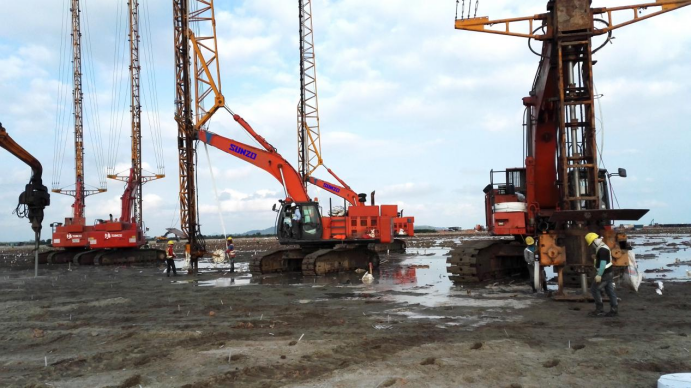
Choosing the right ground improvement method is the first and most crucial step toward project success.
Sunzo Foundation Engineering Co., Ltd. has participated in 300+ major engineering projects over the past 20+ years and summarized one core principle:
“There is no best method — only the most suitable one.”
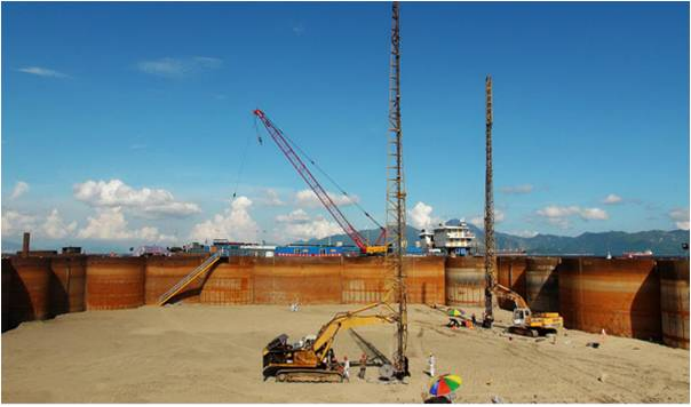
I. Why Choosing the Right Method Matters More Than the Technology Itself
Different techniques have their value, but only when aligned with site conditions and project goals can they truly deliver results. A method detached from real-world needs, no matter how advanced, cannot solve core problems.
1. Soil conditions define the method’s boundaries
Each soil type’s permeability and compressibility determine what methods are feasible:
- Fill soils: Complex composition and large voids → use replacement or vibro-compaction (“densification/displacement”) methods.
- Deep soft clay or silt: High water content, poor drainage → use vacuum preloading or deep mixing (“drainage consolidation/composite ground”) methods.
- Sandy soils: High permeability → vibro-compaction or dynamic compaction (“vibration reinforcement”) work best.
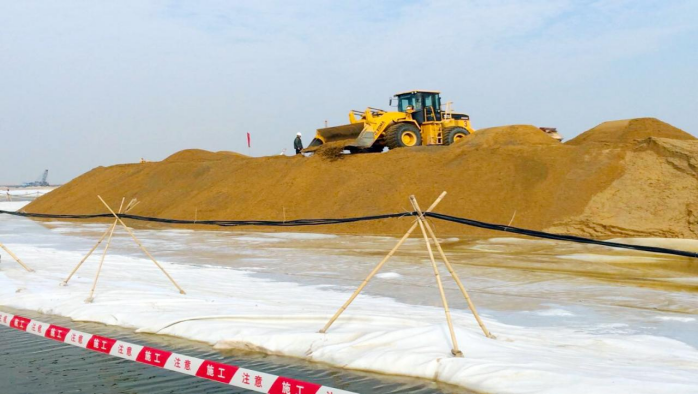
2. Project goals determine method direction
Different structures prioritize different performance outcomes (settlement, stability, or smoothness):
- Factories: Strict post-construction settlement control → use CFG piles or preloading consolidation.
- Bridges: High overall stability → use deep foundations or composite foundations.
- Ports: Large area, fast consolidation → vacuum preloading or surcharge preloading.
- Runways: High flatness → dynamic compaction + surface leveling.
3. Balancing cost and schedule is key
- Deep foundations (bored piles, precast piles): strong and safe but 3–5× more expensive.
- Replacement: effective but shallow (≤3 m) and takes 2–3 months longer than vacuum preloading.
- Vacuum preloading: achieves safety at ⅓–½ the cost of deep foundations and cuts time by 40%+, making it a balanced choice in most scenarios.
4. Environmental and site constraints refine choices
Sometimes constraints are deal-breakers:
- Urban renewal: Avoid vibration → use high-pressure grouting or mini mixing piles.
- Coastal/port projects: Prefer vacuum preloading (no spoil or noise).
- Seismic areas: Must prevent liquefaction → use vibro-compaction or stone columns.
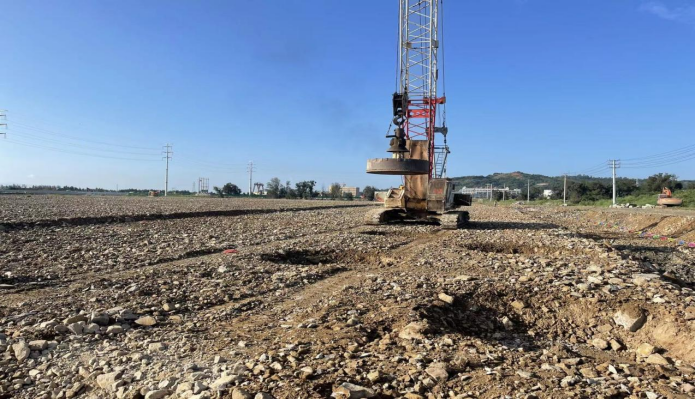
II. Deep Dive into Common Ground Improvement Methods
1. PVD + Vacuum Preloading (Sunzo’s patented Water–Air Separation Vacuum Preloading)
A high-efficiency consolidation solution for deep soft soils (silt, mud). Combines vertical drains with vacuum suction to overcome slow natural consolidation—cutting time by 30%+ and minimizing environmental impact.
Advantages:
- Fast & efficient: 3–6 months consolidation (10 m soft soil ≈ 4 months), 50% shorter than surcharge preloading.
- Economical: 100–200 RMB/m²—only ⅓–⅕ of pile foundations (500–1000 RMB/m²).
- Eco-friendly: No spoil, dust, or vibration (noise ≤ 60 dB).
- Deep & versatile: Treats up to 20–50 m, ideal for ports, runways, highways, and reclamation.
2. PVD + Vacuum + Surcharge Preloading
For deep soft soils with high load demand, this hybrid system combines vacuum and active loading pressure, offering higher strength and faster consolidation.
Advantages:
- Shorter schedule: 30–50% faster than traditional surcharge preloading.
- High load capacity: Achieves 120–200 kPa bearing capacity.
- Cost-effective: 150–250 RMB/m² — 50–70% cheaper than piles.
- Flexible: Local soil or sand can be reused as surcharge material.
Applications: Industrial plants, logistics yards, roads, and reclaimed land requiring 6–12 months of consolidation.
3. Replacement (Soil Exchange)
Removes ≤ 3 m of soft or fill soil and replaces it with compacted sand, gravel, or lime soil.
Advantages:
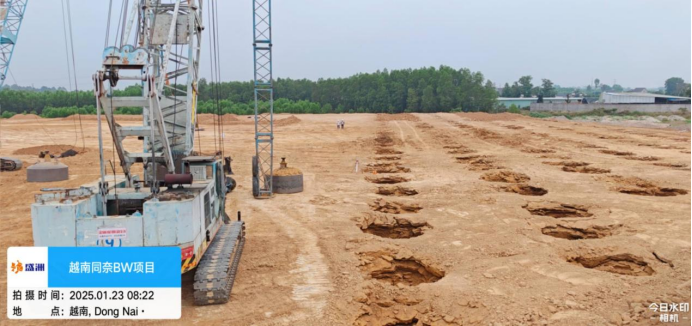
- Simple, quick (1–2 weeks per zone), low cost (50–100 RMB/m²).
Limitations: - Only effective for shallow soils.
4. Shallow Dynamic Compaction (≤ 1000 kN·m)
Drops 10–20 t weights from 5–8 m to densify 1–3 m of loose soil.
Advantages: Fast (10,000 m² in 3–5 days), cheap (30–60 RMB/m²).
Limitations: Noisy (> 85 dB) and unsuitable for urban areas.
5. Deep Dynamic Compaction (≥ 2000 kN·m)
Drops 20–40 t weights from 10–20 m to compact 3–10 m of loose sand or gravel.
Advantages: Deep effect, low cost (80–120 RMB/m²).
Limitations: Requires heavy cranes; vibration range ≤ 50 m.
6. Cement Deep Mixing
Mechanically mixes cement slurry with in-situ soil, producing solid soil–cement columns.
Advantages:
- Affordable: 120–200 RMB/m² (⅓–½ of precast piles).
- Medium depth (5–20 m)—handles deeper soil than replacement.
- Quiet, low disturbance (≤ 70 dB), ideal for urban renewal.
7. Vibroflotation (Replacement / Densification)
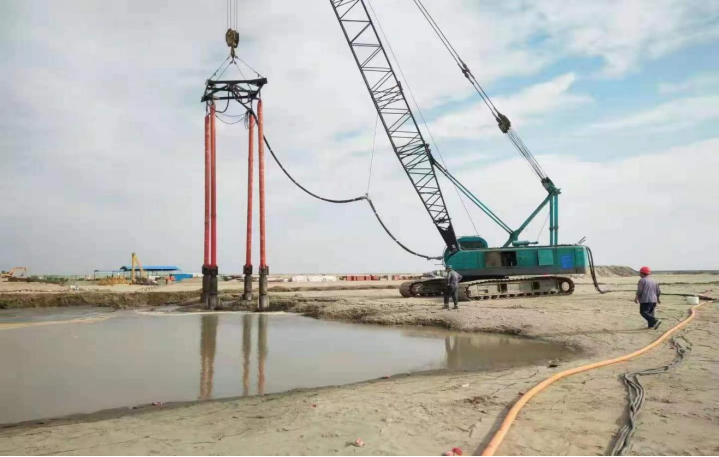
- Replacement mode: Inserts crushed stone under vibration to form stone columns.
- Densification mode: Reorganizes sand grains to resist liquefaction.
Depth: 3–15 m.
Advantages: Broad applicability, fast installation (3–5 piles/hr).
8. CFG Piles (Cement–Fly Ash–Gravel)
Drilled and filled with mixed cement, fly ash, gravel, and water; forms strong piles (C15–C30).
Applications: Mid-rise buildings, factories (200–400 kPa capacity).
Advantages: High bearing strength, minimal settlement (≤ 5 cm).
Limitations: Higher cost (300–500 RMB/m²), requires 28 days curing.
9. Precast Concrete Piles
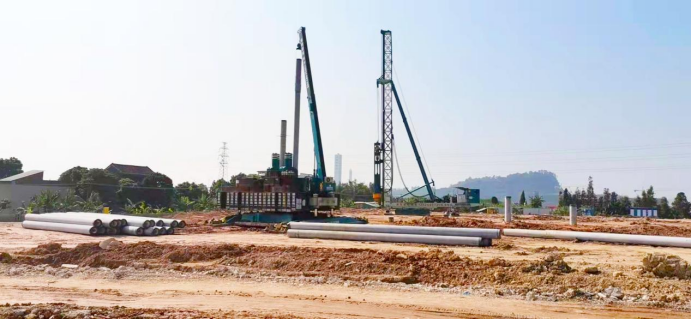
A rigid deep foundation solution that transfers loads directly to hard strata.
Advantages:
- Factory-made quality, highly durable.
- Fast installation (15–30 min per pile).
- High capacity (1000–5000 kN per pile).
- Quiet (≤ 60 dB) when pressed, ideal for urban cores.
III. Decision Process for Method Selection
- Define geological conditions – set technical feasibility boundaries.
- Clarify project goals – load, cost, schedule, settlement.
- Check environmental constraints – eliminate nonviable methods.
- Compare & optimize – balance performance, cost, and risk.
IV. Key Considerations in Design & Construction
Effective foundation design translates geological conditions into practical, controllable parameters.
Focus on:
- Accurate design: Avoid theoretical detachment from real soil data.
- Controlled construction: Prevent deviation from design standards.
- Risk management: Predict and mitigate settlement or stability issues.
V. Typical Application Scenarios
1. Land Reclamation Projects
| Method | Key Advantages |
|---|---|
| PVD + Vacuum Preloading | ① Accelerates drainage; 15 m soft fill consolidated in 4–5 months (50% faster). ② No spoil, low vibration, eco-friendly. |
| PVD + Surcharge Preloading | ① Water-filled surcharges lower cost. ② Achieves >150 kPa bearing capacity. |
2. Industrial Parks
| Scene | Method | Key Advantages |
|---|---|---|
| Multi-story Plants | Deep Mixing, Vibro Replacement | Medium load (180–220 RMB/m²), liquefaction resistance. |
| Heavy Workshops | CFG Piles, Precast Piles | High strength (200–250 kPa), minimal settlement (≤ 3 cm). |
3. Transportation Projects
| Type | Features | Method |
|---|---|---|
| Highways | Soft soil, fast track (2–3 months), low cost | Dynamic compaction, replacement, mixing piles, CFG piles |
| Runways | Tight flatness (≤ 3 mm/4 m), low settlement (≤ 2 cm) | Dynamic compaction, vacuum preloading, mixing, CFG piles |
| Container Yards | Large area (≥ 50,000 m²), fast consolidation | PVD + Vacuum Preloading |
4. Residential Projects
| Type | Features | Method |
|---|---|---|
| Low-/Mid-Rise (6–11 floors) | 3–8 m soft soil, low cost (≤ 200 RMB/m²) | Deep mixing, replacement + stone columns |
| High-Rise (12–30 floors) | 8–15 m soft soil, 150–200 kPa capacity | CFG piles, precast piles |
| Super High-Rise (> 30 floors) | 15–25 m soft soil, > 250 kPa load | Precast (PHC) or bored piles |
VI. SUNZO’s Expertise and Strengths
- 20+ years in operation (est. 1999), 300+ projects completed.
- 48 patents, including 9 inventions.
- Full equipment fleet: PVD rigs, vacuum units, mixing machines, jet grouting, dynamic compactors, vibroflot rigs, CFG pile rigs, hydraulic hammers, and marine vessels.
- Global footprint: China, Singapore, Malaysia, Vietnam, India, Middle East.
- Clients: CCCC, CRCC, MCC, Prologis, ESR, Sembcorp, Dhamra Port, Penta-Ocean, Gamuda, CSCEC, and others.
VII. FAQ
Q1: Is deeper soft soil more suitable for vacuum preloading?
A: Yes, especially for large-scale coastal or reclaimed areas.
Q2: When to use piles instead of ground improvement?
A: When soft layers exceed 30 m and the structure is high-rise—piles are more economical.
Q3: What monitoring is required during vacuum preloading?
- Vacuum pressure
- Settlement
- Horizontal displacement
- Groundwater level
- Pore water pressure
Q4: Can multiple methods be used on one site?
A: Yes. SUNZO often applies combined solutions tailored to each zone’s soil and usage.
Conclusion
Selecting the right ground improvement method is not just an engineering choice — it’s a strategic decision for project success.
With decades of experience, patented technologies, and a complete equipment system, Sunzo Foundation Engineering provides end-to-end solutions — from investigation, selection, design, and construction to monitoring — ensuring that every project is safe, cost-effective, and reliable.
 English (United States)
  Vietnamese
  Malay
Malay  French
  Spanish
  Indonesian
  Russian
  Arabic
  Thai
Thai  English (South Africa)
  Panjabi
  Portuguese
  Afrikaans
  Amharic